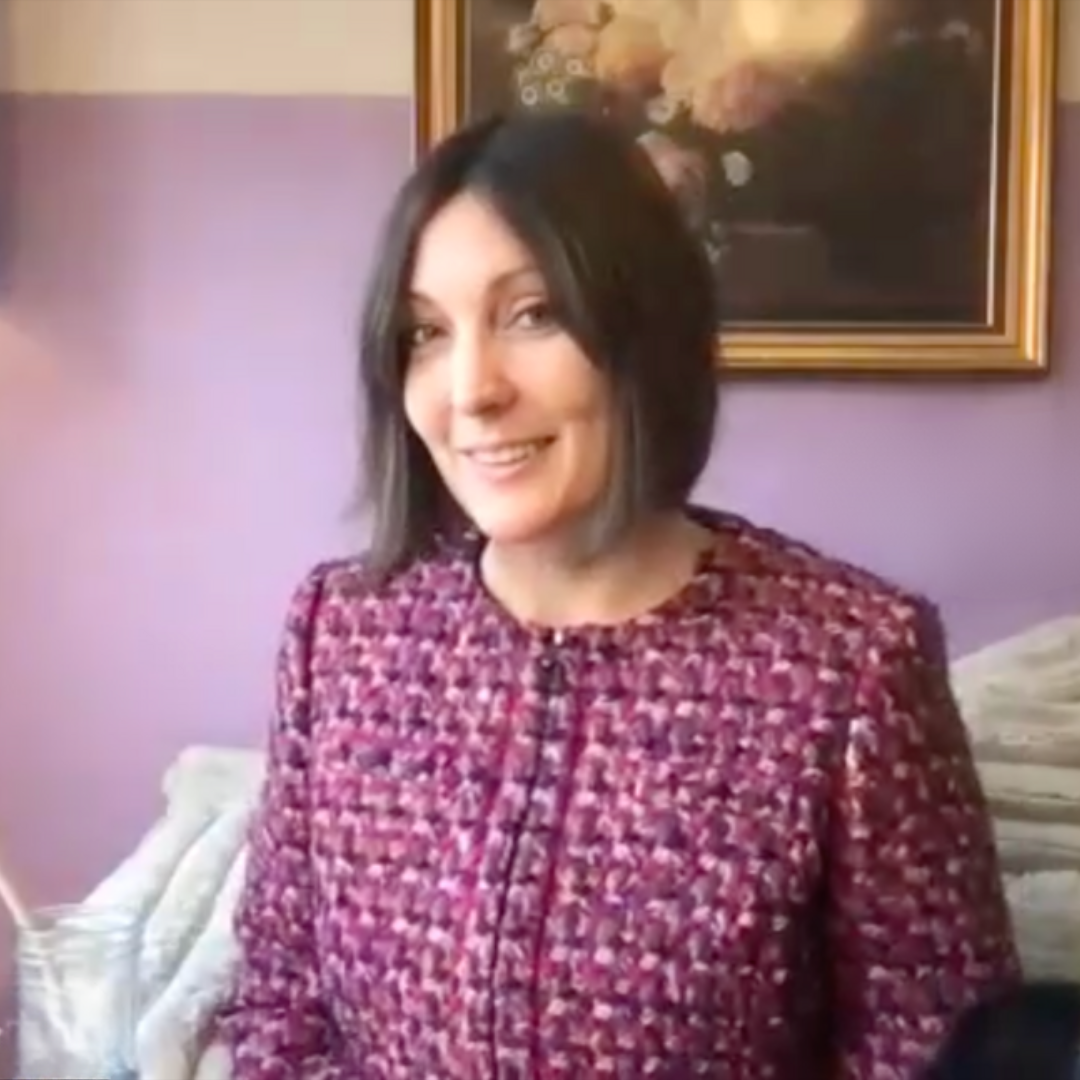

Provider: Camille Pack, MA
Session Format
Telehealth Services on HIPPA Compliant Video (Zoom)
Contact
For Camille Pack’s waitlist, reach out to beingattachedq@gmail.com with subject line: IPF Protocol Waitlist.
We’re very sorry that a high volume of emails and a small team may delay response.
FAQ with Camille
Camille: I often collaborate with givers, the people who carry the emotional load of their relationships and may self-identify as anxious or co-dependent. Because they’re highly agreeable, they may also be healing from relationships that caused anxiety and insecurity, due to the other person’s withholding of warmth and affection, intermittent affection, or avoidant/dismissive attachment style.
Camille: I began training with the textbook in May 2021, started offering IPF meditation sessions to my clients in the fall of 2021, and I took the formal Level 1 training with David Elliott in Nov 2022.
Camille: OMG, everyone should do this work. It’s so empowering! That doesn’t mean you should do it with me. I’m a coach, and my trauma-training is why I’d encourage you, if you carry complex trauma or have an attachment disorder, to explore this modality with a compassionate, trained therapist who calms and soothes your nervous system.
Your life is precious, and the terrain is intricate. If you suspect you struggle with something like PTSD or a personality disorder, such as Borderline, Dissociative Identify Disorder, Anti-Social, or Narcissistic Personality Disorder, please consider reaching out to a therapist.
Camille: I do use questions from the AAI (the Adult Attachment Inventory), to find descriptive words for the Ideal Parent Figures we’ll use in meditation and to understand your history, if you’re comfortable talking about your history. However, I don’t administer or score the AAI.
That said, you’re welcome to take the AAI and have it shared with me. It’s common for professionals to do AAI interviews exclusively, without carrying a week-to-week caseload. Typically the interview and scoring are done by different professionals and then sent to the referring coach or clinician.
A few more details on that below…
For those who are unfamiliar, the AAI is a well-respected, semi-structured interview for scoring attachment. The test can be used before and after 3 Pillars / IPF work to assess attachment style, determine what branch of the 3 Pillars model to employ in repair, reveal loss and trauma, and confirm earned security at the end of collaboration when you re-test.
Many who carry trauma find the test itself triggering, as it asks you to recall and describe potentially upsetting events, which can be particularly difficult if the assessor is only meeting with you one time and limited in their ability to give comfort due to the nature of the test.
The person scoring the transcript of your AAI interview will apply several scales to classify your attachment. They’ll score (1) the coherence of how you describe the past, (2) the idealization-level you have for your caregivers, (3) how hard it is for you to remember your history, (4) how involved you are in your anger as you discuss your caregivers, and (5) the level of passivity, vagueness or lack of emotion in your transcript. This is based on your descriptions of childhood experiences, the words you use, and your ability to give an integrated, believable account of your experiences and how they impacted you.
Security is demonstrated with a balanced view of early relationships, a valuing of attachment relationships, and a view of their importance in development.
Insecure/dismissing/avoidant is demonstrated by difficulty integrating memories with meaning, devaluing the importance of early attachment, difficulty remembering specific events, frequent idealization of caregivers, and an early history of rejection.
Insecure/preoccupied is demonstrated by difficulty integrating memories with meaning, confusion about the past, and current relationships with caregivers marked by active anger or passivity.
Unresolved/disorganized may be added to the front of the attachment categories above to indicate unresolved attachment-related trauma.
Can’t classify may be indicated when there are high scores in more than one area.
You can have the AAI administered and professionally scored before starting 3 Pillars work (typical fees are $350 – $800USD), or you might choose to skip testing and discuss a workaround.
I’d encourage you to go into the AAI with a fresh slate if you feel like it would benefit you and you have the means and access. However, in the spirit of ‘knowledge is power,’ if you plan to skip the AAI, you can preview the questions and an explanation for their relevance in this pdf.
Camille: I totally understand how hard it is to find a 3 Pillars / IPF trained provider. After lots of emails, the first person I found to practice with was trained by a well-respected meditation teacher, but they had limited availability and didn’t do the foundational back-and-forth conversational piece, where you share your imaginative experience with the facilitator.
So, I know. The struggle is real. And it makes sense that it’s difficult to find providers because it’s a new modality that wasn’t published until 2016.
David Elliott plans to provide a facilitator list, and while it’s not currently available at this writing, this is where you can check to see if it has become available. There’s also a IFP provider list on reddit and George Haas has a list of providers in the Mettagroup facilitator directory.
We will also add providers to Being Attached as we receive applications.
If you’re having trouble finding someone, here are some supplemental things you can do to start:
(1) Join the Being Attached community when it goes live. Get notified when we open the doors here.
(2) Give the textbook to your own un-trained therapist – chances are good they’ll be fascinated and willing. The textbook has everything they need to begin practicing the method.
(3) Read the textbook with someone else who is interested, and skip the first 1/3 if you don’t want the history. A lot of people can get bogged down in that. The authors are very clear that EVERYTHING you need to begin practicing this modality is included within the textbook.
(4) Then you can do it with that peer.
(5) Do it on your own with online recordings. And write down what you’re imagining to reinforce the experience. There are two drawbacks here. One, you’re missing the relational aspect and two, an online recording is not as good as your imagination would be at providing healing scenarios. That said, it’s better than nothing in a pinch. Here’s where you can find mine.
(6) Do a different well-respected modality for healing attachment, like Diana Fosha’s AEDP. AEDP has been around longer, so it will probably be easier to find a therapist.